

Here Be Dragons
Hollywood and the Harbor

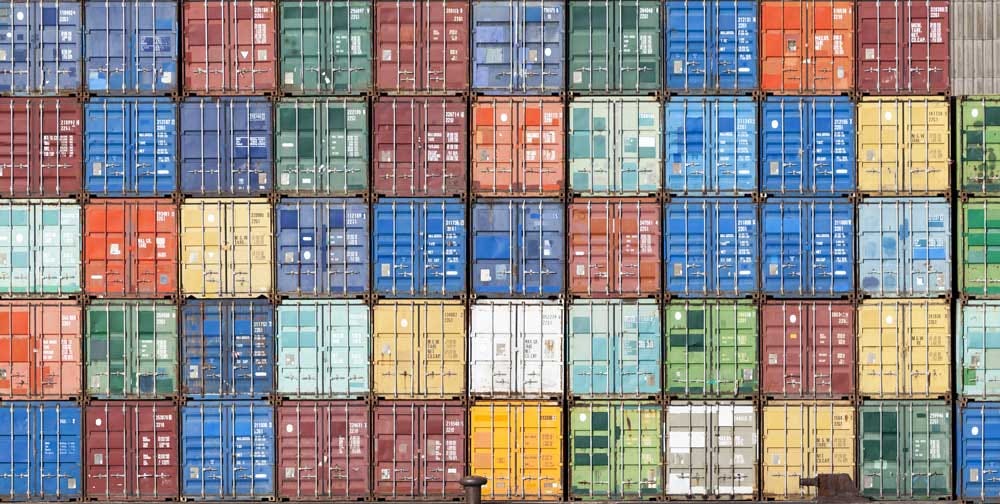
When a shipping container shows up in a movie, somebody’s about to die.
Near the beginning of The Usual Suspects, a boat burns in San Pedro harbor, there are bodies on the dock, and those steel cans stacked in the background like they saw the whole thing, but aren’t talking. In Heat, a container terminal is where Michael Mann puts Pacino and DeNiro, the hunter and the hunted, who disappear behind identical walls of Corten steel, ten feet apart and invisible to each other. The Wire built an entire season around what was sealed inside one. Ironman, Sicario, maybe half the Bond films, and every cop show that needed somewhere vast and indifferent to stage a confrontation, they all come back to the container. It has become Hollywood’s universal symbol for the place where civilization runs out. Like the edge of the map marked here be dragons.
But the containers weren't always there. Malcolm McLean is why.
McLean was a truck driver from North Carolina who got tired of waiting. He watched longshoremen load cargo crate by crate onto a ship and thought there had to be a faster way. In 1956, he loaded fifty-eight metal containers onto a converted tanker ship and sailed it from Newark to Houston. That voyage changed the world so completely that today a single container landing in Los Angeles might hold 16,000 Nikes made in Vietnam, 1,000 televisions from South Korea, or 100,000 bananas from Ecuador. Marc Levinson wrote the definitive account in his excellent book, The Box. Read that if you want the full story.
Most ideas seem simple after someone else has them. Don’t unload the trucks, just take the boxes off the truck, put them on a ship, and stack them as high as you can. Ship them wherever they need to go, and put them back on trucks and trains when they arrive.
What followed was the globalization we are living through today. Quickly, the system became so efficient that it became invisible. And invisible things are where the darkness lives, which is why the movies keep coming back to the docks.
The Ports of Los Angeles and Long Beach sit side by side at the edge of the city and together form the largest port complex in the Western Hemisphere. Nearly a third of everything imported into the United States comes through here. The newest ships are beomouth, holding 22,000 containers, and measuring 1,300 feet stem to stern. If you stood the ship on one end, it would be the tallest structure in Los Angeles, beating the Wilshire Grand Center by several stories. A single crane unloading a ship can tower almost 200 feet above the dock, its arm stretching across two dozen rows of steel cans, plucking them off or loading them at a steady clip of about forty an hour on a good day.
I have grown up with the men and women who work these docks. They work in concert with machines big enough to kill them and designed to replace them. They are members of the ILWU, one of the last great American unions, and they know it. Some of their fathers worked there before them, breaking up bulk cargo by hand in the ship’s hold, using a wooden-handled steel hook to drag the bales or crates wherever they needed to be. The next generation of dockworkers may be locked in a John Henry-like battle against the machines. I saw Terminator. Let’s back humans where we can.
Hollywood treats these docks as the city’s shadow. It’s supposed to be a place where the plot goes dark, but it’s really the engine. Los Angeles evokes images of movie stars, great weather, and a mythology that seldom stands up to scrutiny. What it doesn’t get enough credit for is the fact that everything comes through here.
Malcolm McLean died in 2001, but there are something like forty million containers moving through the world right now. Because he was tired of waiting.
The movies keep telling you to be afraid of them. I’d suggest a little gratitude instead.
xAP
i loved this!
Thanks again Ante for your great insight ! Thank God for the docks San Pedro would not be the same without them ! Thank God for the ILWU!