

Jackie Brown’s Field Guide
Summer Hard Week 5

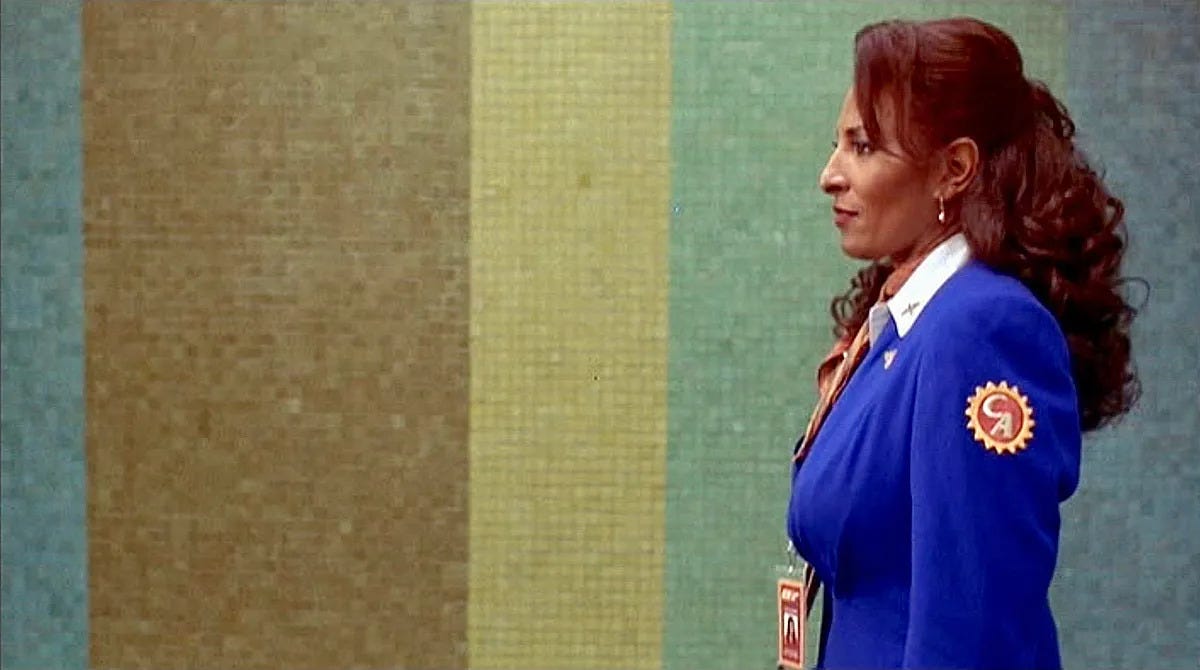
Jackie Brown isn’t considered Tarantino’s best movie. It’s slower than Pulp Fiction, quieter than Reservoir Dogs, and nobody quotes it like “Royale with cheese.” But it’s the one I come back to because of its slow burn and iconic locations. Pam Grier and Robert Forster play tired and smart and a little bit in love, living through the version of LA that I grew up in.
Tarantino grew up down here, in the South Bay, and Jackie Brown let him point his camera in his own backyard. It’s also the only film he’s ever adapted from a novel, Elmore Leonard’s Rum Punch, and I am a huge Leonard fan. Leonard’s Jackie was white and lived in Florida, but the dialogue in both versions is clipped and practical, and the subject meanders in the way Tarantino became famous for. The movie features Pam Grier as a flight attendant who smuggles drug money and then moves to the South Bay. The story is better for it, and the movie is a quieter and more grown-up version of a Tarantino film. It also becomes a field guide for South LA, even though some of the places are gone now.
LAX, Terminal 3
Jackie is cruising through the pedestrian tunnel, the midcentury wall tiles behind her, opening credits running over them. Tarantino returns to the same location twenty years later in Once Upon a Time in Hollywood. LAX doesn’t get written about as a place, just as a pain in the ass you pass through to get to somewhere else, but I always wonder what secrets funnel through the tunnels.
Del Amo Mall, Torrance
The movie is long, and the half-hour spent on this sequence is part of the reason. In 1997, this was the biggest indoor mall in the world, the last decade that malls mattered. In the South Bay, it was basically our town square, where kids made out, smoked cigarettes outside, had food court fights, or got their first job at the Hot Dog on a Stick. In the movie, Louis, played by Robert DiNero, shoots Melanie, played by Bridget Fonda, in the mall parking lot. The mall has been remodeled like some faux-bougie McMansion now, but technically it’s still standing.
The Cockatoo Inn, Hawthorne
Where Ordell, played by the irreplaceable Samuel Jackson, and Jackie have a drink, The Cockatoo, a legendary mafia spot, was visited by Nixon, and frequented by gamblers, especially the horse racing crowd, thanks to its proximity to Hollywood Park. It’s a new motel now, though a place down the street has stolen the name with a neon sign.
Sam’s Hofbrau, Downtown
I have never been to a strip club, nor have any of my friends. That’s what I am putting in writing. But if I had ever been to Sam’s Hofbrau, I might tell you that this place on Olympic Blvd, where parking can get a little tight, actually serves decent wings and $3 happy hour beers. The place was originally part of a Californian change, but was sold off in 1969 and didn’t add adult entertainment until 1995. Ordell hung out at the Hofbrau to establish an alibi until Louis picked him up. Still there.
Max Cherry’s Bail Bonds, Carson
A bail bonds office is just an office. But it helps if it's vintage and seedy, especially in a Tarantino film. This was a real bond office in a real strip mall storefront, the kind LA has produced by the thousands. Carson doesn’t show up in movies too often, so film geeks rejoice. Max Cherry, an aging bondsman played by Robert Forster, falls for Jackie Brown after he bails her out for Ordell. The ending of the movie smolders in his shitty office when Jackie asks Max to run away to Spain.