

Uncharted
Why We Need Maps to Help Us Get Lost

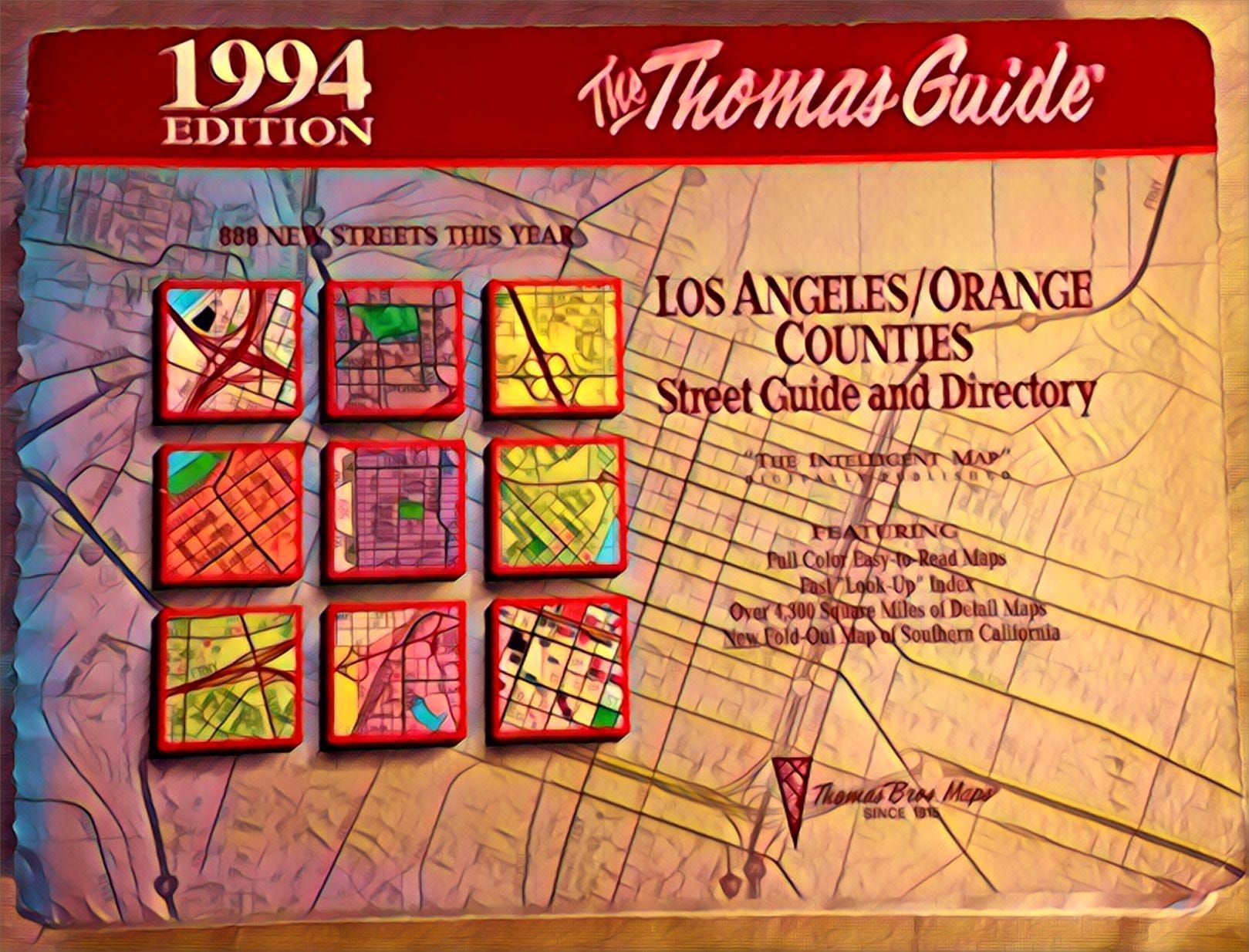
When I started my first job, my vehicle did not have a phone or GPS, but I had a tattered old spiral-bound book to help me navigate the endless streets of Los Angeles. There are over 50,000 street names in LA and over 350,000 blocks, and this book placed a grid over them, allowing you to flip to page 44 for example, trace your index finger to section D-2 of that page and find the downtown Criminal Courthouse. You don’t need to know how I know that.
Of course, this analog marvel died in the digital age, having gone the way of the sexton, the compass, and all paper maps. Satellite, cellular, and internet technologies converged on humanity not to help us find our way but to tell us where to go.
What we have gained efficiency, we have lost in magic. Maps gave us a direction but lacked granular detail. We still had to embrace the unknown or could willingly surrender to the whims of chance and wander a little while still knowing how to find the other side.
Efficiency is a beautiful thing. We don’t want our first responders to wander aimlessly while you flatline. But efficiency in our personal lives can be a ruthless taskmaster. Navigation apps today are incredibly efficient. Your directions home will often route you around slow traffic with such detail that the driver may be commanded to make a left at the next alley, honk his horn twice, and wave at John sitting in the window while traversing the following three blocks to renter the same street two cars ahead of where you have started. That same voice navigation will then chastise you for veering off course, repeatedly demanding that you make a U-turn to continue the route. That’s when you’ll find me yelling at the machine, “Bro, I’m just trynna stop for tacos.”
Those dog-eared corners of the Thomas Guide are thumbprints of memory. Of getting lost and finding my way, of the places I’ve been and the people I’ve met. The Thomas Guide, or any map meant to hold in your hands, seemed to be just the proper perspective to find unseen connections. Maps intended to be used “in the field” were human-scaled. Your eyes could process enough data to get where you needed to and then get lost in some new place. Or at least it was new to you. They acted as catalysts for serendipity and adventure.
Let me assure you, I bear no grudge against the digital realm, nor do I dismiss the amazement of innovation or the efficiencies it brings. This composition you now peruse is not the product of a quill and scroll, but rather a digital manifestation, as I imagine your reading experience is. Yet, I find myself gripped by an overwhelming apprehension - almost outright dread - that our relentless quest for efficiency is eating away at our wonder, like some cancer of the soul. When we, the weary kind, bemoan the march of technology, we do not yearn for an entirely analog world. No, our longing resides within the spaces between progress. Some juncture, both sacred and imagined, lies wedged between the explorer spirit of Lewis and Clark and the rise of the machines that dictate our movements.
In our malleable childhood, getting lost was an adventure untethered by fear or anxiety. Each wandering step unveiled hidden treasures and unexpected encounters, etching indelible memories in our minds. Ferns in the backyard became dense forests; sidewalks were long and winding roads, and each new place became some tremendous new city. Safe within the map provided by our caregivers, getting lost was not a threat but a conduit for unbridled imagination—a gateway to unexplored horizons and an expansion of boundaries.
Getting lost cultivates our sense of wonder and curiosity. It encourages us to embrace spontaneity and to let go of our need for control. By relinquishing the predetermined path, we open ourselves up to the unexpected and the unfamiliar and build our souls. Getting lost teaches us to rely on our intuition, trust our instincts, and navigate life's uncertainties. It reminds us that the journey is just as important as the destination and that the value of an experience lies not in its predictability but in its capacity to surprise and challenge us.
Those digital breadcrumbs, leading us from here to there and back again, don’t allow us space to look up and look around. They blind us to the uncharted world that lies beyond the little quadrant on the grid we aim for. Without new discoveries, we are left gazing upon the fading embers of curiosity and awe
As we navigate the ever-shifting currents of our digital age, let’s not surrender our sense of wonder to the relentless pursuit of efficiency. Instead, let’s tread our streets with curiosity as our guide, seeking out the hidden corners that bear the marks of the past and the promise of the future.
…